ERP System Development

160
5,0

Webdelo is an ERP development company that helps businesses automate internal operations through custom ERP systems tailored to their specific processes and goals.

We implement ERP as a standalone solution or develop a unified product that combines a web platform with a powerful ERP core for full business management.

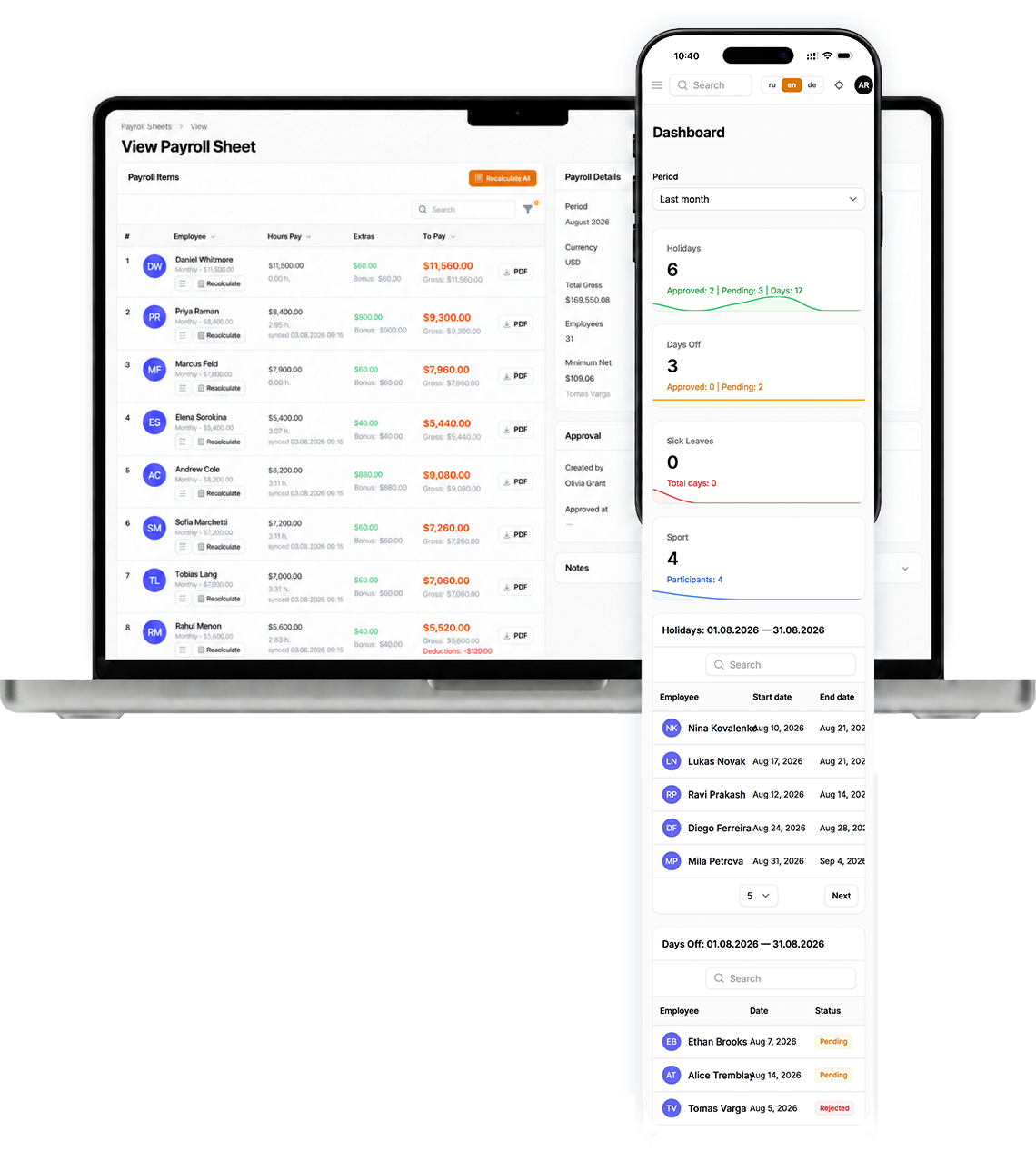
Our systems bring together requests, team workflows, orders, documents, and analytics into one structured environment. They enable automated document and invoice generation, real-time calendar and booking management, client communication and notifications, route optimization, and scalable process automation across the entire business.

teams 40+ team members

Working in-house, without outsourcing or intermediaries.

2 130+ projects

Delivered with a wide range of ERP automation solutions.

sem Custom automation

Built around your business processes, without reliance on third-party subscriptions.

team Let's meet in person

in the US. We operate officially in three countries.

Who We Offer ERP Development To

Are your reports delayed? Do your employees spend too much time on manual tasks? Does your business rely on multiple subscriptions, such as a CRM ERP system , while data is scattered across spreadsheets, third-party tools, and CRM platforms?

We help solve this once and for all by implementing a custom ERP solution built specifically for your business.

We offer ERP software development for:

startups at the MVP stage
growing business (scale-up)
corporate and enterprise companies
companies with an internal IT department (as well as an ERP for software development companies)
businesses entering the US / EU market

Timelines and Cost of Customized ERP Software

We will dive into your business processes, integration points, and security requirements. After that, we will determine the cost of ERP integration. Below are approximate timelines for integration for different types of business.

What’s Included Timeline Cost
Basic ERP for business management Requests, clients, deals, invoices, documents, and basic analytics in one system. Suitable for companies that want to put things in order in processes and work without spreadsheets and manual accounting. 4–6 months on request
Manufacturing ERP Production planning and control. Management of orders, workshop workload, actual prime cost, and product quality. Helps to plan production and reduce downtime. 8–12 months on request
Logistics and warehouse ERP Supply and warehouse management. Address storage, batch control, movement of goods, and integration with logistics services. Allows you to manage inventory and optimize supplies. 7–10 months on request
ERP for trade and e-commerce Goods, sales, and sales channels. Unified accounting of goods, integrations with online stores and POS (points of sale), management of prices and loyalty programs. 6–9 months on request
ERP for holdings and groups of companies Finance and management of several legal entities. Data consolidation, intercompany settlements, financial reporting, treasury and HR (human resources) management. 10–14 months on request
BI and management analytics Owner's dashboards with key business indicators in real-time. Helps to make decisions based on data. Implemented in parallel with ERP on request

Related ERP services: development of web services and web applications, web design, and search engine optimization (SEO promotion).

Industries

Typical ERP Automations

An ERP unites the key processes of the company in one system. As a result, there is no need to use separate services and third-party crm ERP software — all data and operations work in a single contour.

In an ERP, you can automate:

processing of requests and orders
invoicing and document preparation
warehouse and supply management
production control
booking of objects and resources
financial reporting
analytics and management indicators
dashboards with key business indicators
notifications in the browser and on the phone
Real Estate Real Estate
Dentistry Dentistry
Equipment repair
Crypt
Medicine
IT and SaaS projects
Beauty Beauty
E-commerce
E-commerce
Construction
Tourism

Examples of Our Work

VputEN

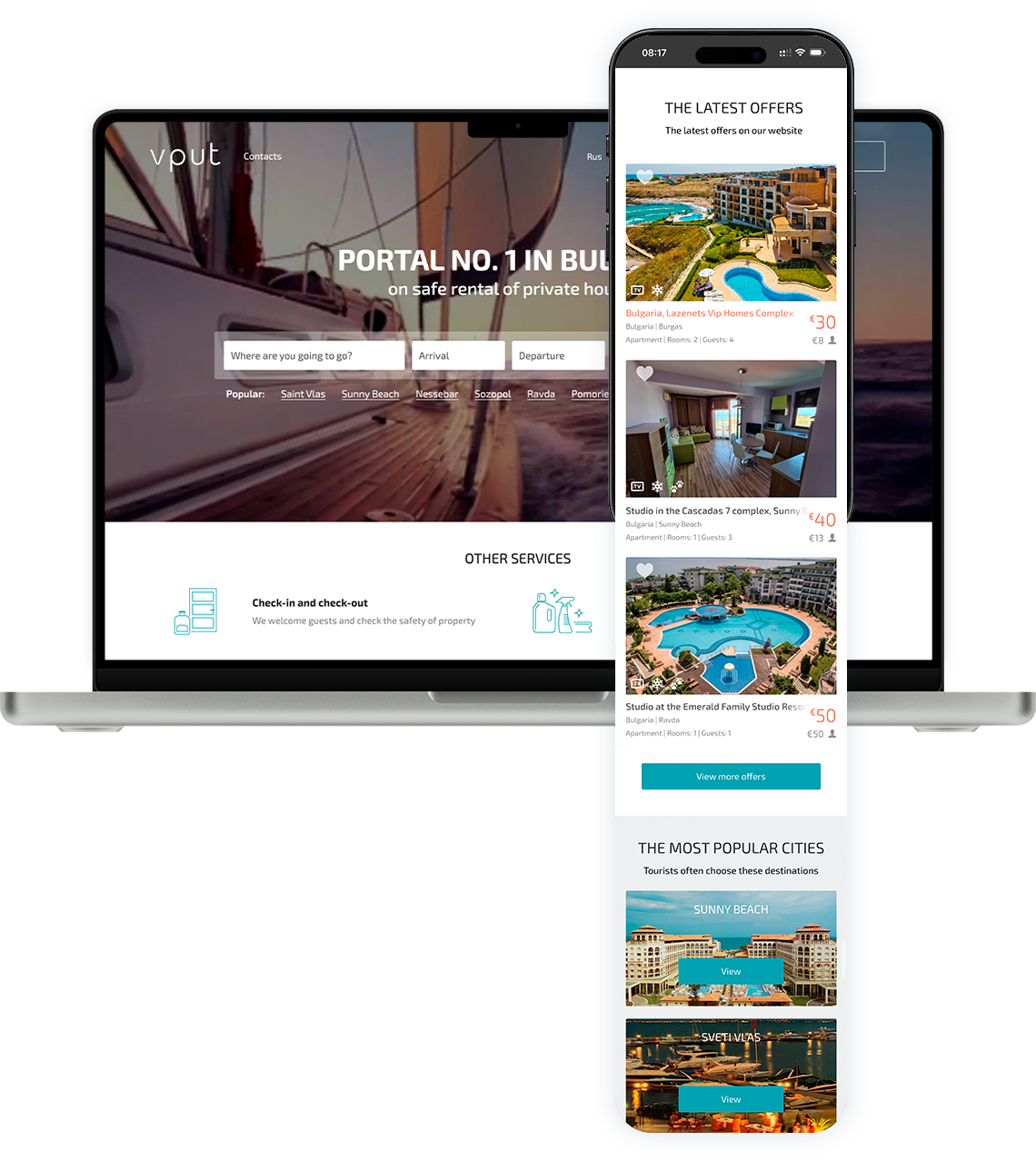
Real estate rental VPUT

Webdelo is the co-founder and developer of a portal that allows owners to advertise real estate properties (houses and apartments), managers to conduct moderation, and clients to book and rent housing.

The system includes an automation complex: internal correspondence, calendar and booking, invoicing, notifications by email and phone, reports on new objects on moderation and suspicious messages, as well as ordering additional services (transfer, cleaning, car rental).

10,000 objects

added over all time

10+ key automations

to reduce manager's tasks

Region:
EU
View case
BondamusEN

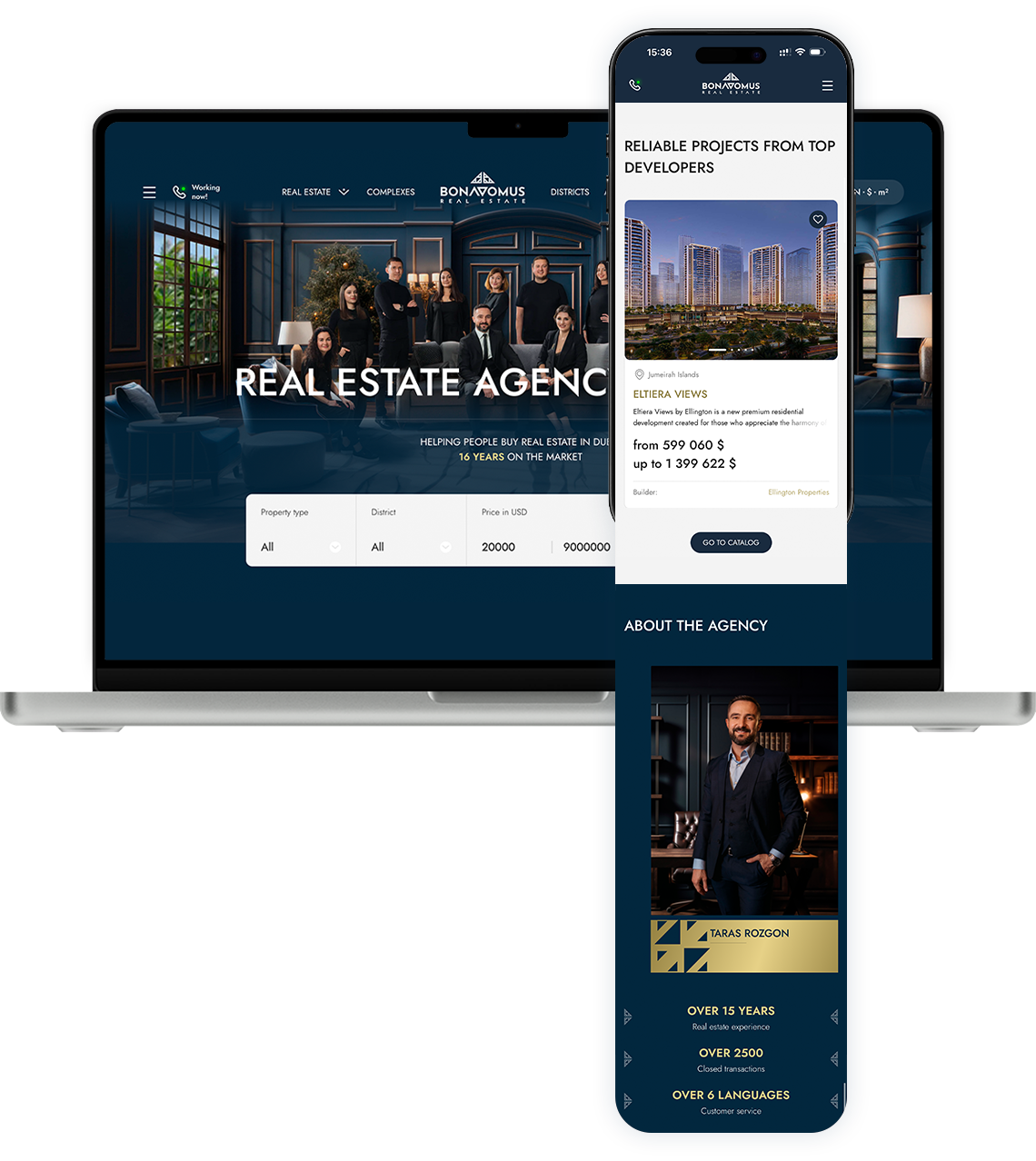
ERP BONADOMUS Real Estate Agency

We are a co-founder and development partner of a real estate portal operating in Dubai and the US.

The project includes advanced automation, such as AI-powered generation of property descriptions, metadata, and image captions, as well as automated import and updates of the real estate catalog through the API (application programming interface) of a leading aggregator.

10,000 objects

with added unique description

3+ key automations

to reduce the load on managers

Region:
US
Dubai AE
BolgarskiyEN

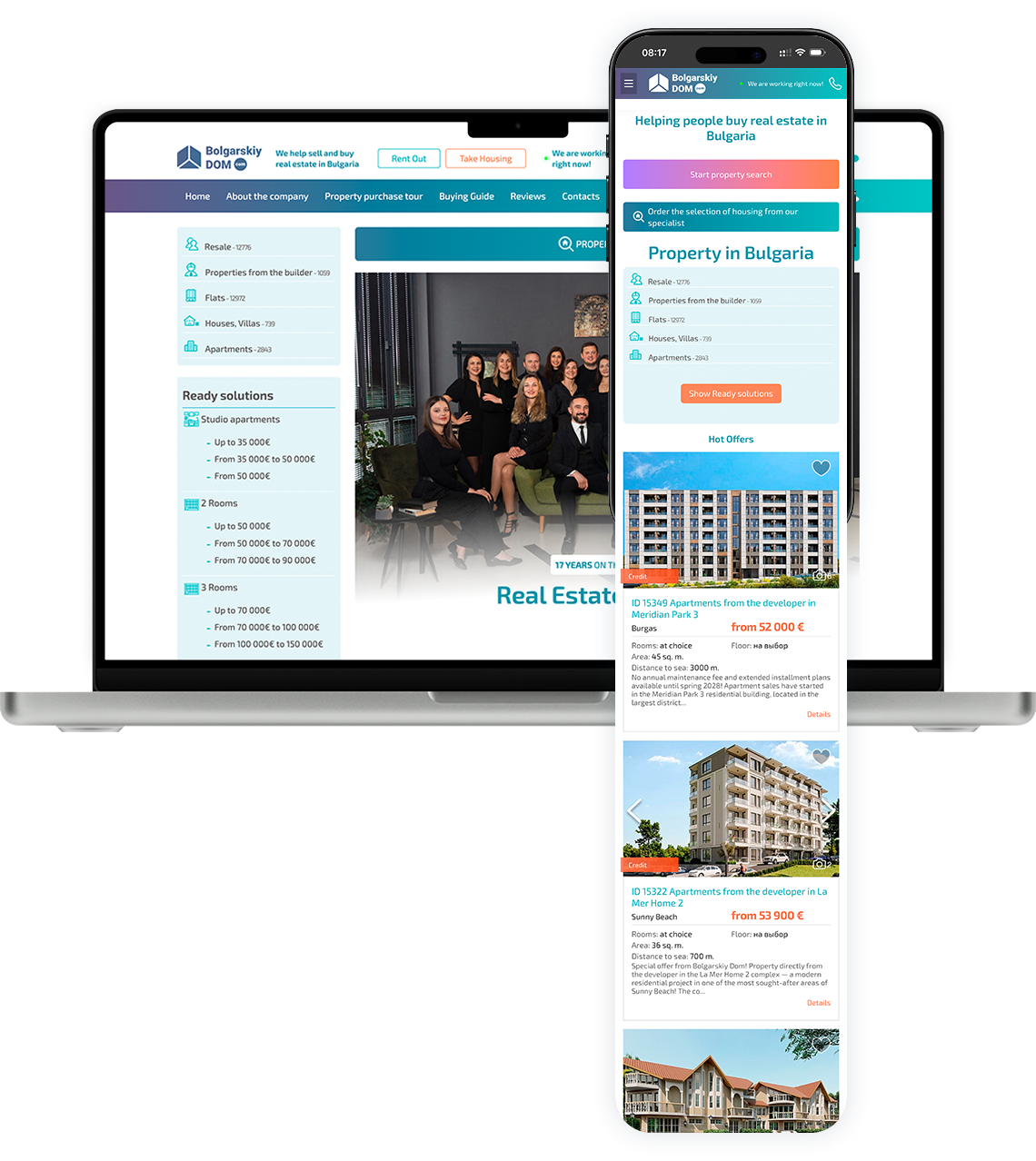
Real estate sales portal BGDOM

BolgarskiyDom — a real estate buying and selling portal with process automation: automatic collection of requests in CRM, management of objects and catalog, integrations, notifications, and tools for the effective work of managers.

10,000 objects

with added unique description

3+ key automations

for optimization of managers' work

Region:
EU
View case
Advantages

Advantages of Webdelo in Corporate ERP Development

We create and develop digital platforms for our own business

In addition to client projects, we create our own digital services and portals. This gives us practical experience in developing systems that work under heavy load and serve thousands of users.

we understand not only development but also the logic of the business behind the system
we perform turnkey work – every single time
Experience working with international projects

We design systems for companies operating in the markets of the US, Europe, and the CIS countries. We take into account the operation of a website with several languages and currencies.

automation of multilingual projects
connection of calculators with several currencies
accumulated experience in automation of various types of business
In-house team of engineers

A coordinated team without third-party contractors. The staff includes more than 40 specialists: system architects, developers, and analysts.

full internal control of code quality
direct work and synchronization with your development department
We make complex processes understandable

We develop simple and convenient interfaces for companies with complex business processes. Management and managers work in an understandable system with statuses, dashboards, and automation of key operations. We take into account long sales cycles, multi-level supply chains, and multi-stage coordination of decisions within the company.

interfaces with a flexible system of roles and access rights
readiness of the system for internal security checks
Predictable cost and transparent development process

We develop systems in stages. Each stage has clear deadlines, tasks, and budget.

we fix the cost and deadlines at each stage
we show ready-made working modules of the system in the development process
50+ ways to speed up the work of ERP

We conduct a technical audit of the system and optimize the code, architecture, and databases so that the ERP quickly processes operations and does not slow down with load growth.

fast processing of requests, orders, and operations
optimized logic of forming documents and invoices
high speed of interface operation for managers and employees
Expert

Let’s Meet In-Person

Dmitrii Cercel Tech Lead

Strategic planning of an ERP usually starts with a series of online sessions to assess the scale of the task. For a deep understanding of your business logic and to ensure full legal clarity, we are ready to meet with you in person and:

  • conduct a face-to-face audit of IT processes
  • discuss the target management model with the board of directors
  • fix the architectural plan of the project
  • agree on the responsibilities of the parties and sign the contract

Preparation for the visit takes up to 7 business days. The meeting can take place at your office or any convenient location in your city.

Dmitry Cherchel
Technical project manager, 17+ years of experience in corporate IT projects
Schedule a Consultation

2026-level ERP Architecture

Automation using AI
We connect intelligent tools for automating tasks: an electronic consultant on the website, assistance to managers when working with requests, generation and updating of SEO content.
Automation of key processes
The ERP takes over routine operations and reduces the load on employees.
automatic document generation
control of deadlines and statuses of tasks
automatic notifications and reminders
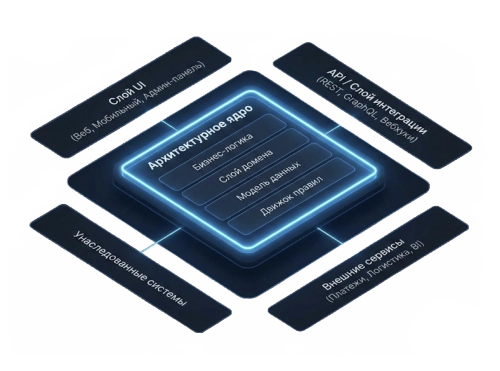
Reliable system architecture
We design the system so that it can be developed for many years without complete processing. Business logic is separated from interfaces, so you can update individual modules and connect new services without stopping the entire system.
Global scaling
The system supports work with several countries, currencies, and legal entities. Suitable for companies with a holding structure and international operations
Reliability and security
A flexible system of access rights allows you to accurately control who sees what data. The system meets modern data protection requirements and can be hosted on the company's servers or in a secure private cloud.
We choose the system architecture for business tasks: a modular system, microservices, or a combination of them. We fix all technical decisions documented and conduct the project according to understandable engineering standards.
Services

Your Own ERP System or Subscription Cloud Services

As the company grows, additional services appear that solve separate tasks: collecting requests (CRM), accounting, warehouse, logistics, and others. Such solutions usually work on a subscription model and are called cloud services (SaaS). As a result, the company turns out to be tied to different services: their stable operation, terms of use, and regular payment of the subscription. Over time, the question arises — to continue working with a set of disparate services or to create a single system: a website and an ERP that will unite the key processes of the company.

Business without its own ERP

When processes are distributed between different services and spreadsheets, managing the company becomes more difficult.
Main problems:
data is stored in different systems and takes a long time to be consolidated into a single reporting
departments work through Excel and manual processes
warehouse, logistics, and accounting are not connected to each other
team growth increases licensing costs
management reporting is formed with a delay
SaaS services limit business capabilities and its unique processes
dependence on external services and their working conditions*
Result:
The company spends more and more funds on different services and integrations, and processes remain complex and non-transparent.

Business with a custom ERP from Webdelo

Your own ERP unites the company's processes in one system and gives full control over the infrastructure.
What the business gets:
a single system for finances, orders, warehouses, and operations
reports and business indicators in real-time
the ability to add new countries, companies, and employees without increasing the cost of licenses
full control over the code and infrastructure
a flexible system that develops together with the business
Result:
The IT system becomes not an expense, but an asset of the company. The business receives transparency of processes, control over data, and a stable foundation for growth. Without its own ERP, the company constantly rents other people's systems and their limitations. Your own ERP gives independence and infrastructure for the long-term development of the business.

*Major failures of cloud services occur regularly and can stop the work of thousands of companies:

Cloudflare failures (2022 and 2025) — thousands of sites and services unavailable
AWS us-east-1 failure (2021) — the work of many internet platforms stopped
global failure of Microsoft and CrowdStrike (2024) — the largest IT incident in recent years
Docker Hub failures — stopping the assembly and updating of systems
Apple DRM restrictions — temporary blocking of access to purchased services Such situations show the dependence of business on external platforms and their infrastructure.

With your own ERP system, the company does not depend on the decisions of third-party services. In the event of a failure, you can independently restore the system, switch to a backup infrastructure, or launch a spare work scenario.

With a custom ERP, you own the infrastructure on which your business is built and grows.

Expert advice

What do you get?

Andrew-P-new

An ERP is a long-term asset of the company. Such a system makes the business more transparent, manageable, and increases its value for investors. With Webdelo you get:

growth of the company's value during a sale or attracting investments
clear IT architecture and documentation for investor checks
predictable expenses for IT for several years ahead
transfer of knowledge and the system to your internal team
Andrew Popov
Architect of corporate ERPs, 17+ years of experience in developing high-load systems
Schedule a consultation
Stages

Stages of ERP Implementation

A roadmap for launching the system without stopping the business. We implement the ERP in stages: first, we analyze the company's processes, then we design the system, and gradually connect key departments. This approach reduces risks and allows you to get an effect already in the process of implementation.

Stage 1

Analysis of company processes

We study current business processes: work with requests, orders, documents, warehouses, and reporting. We determine bottlenecks, manual operations, and points where time and money are lost.

Stage 2

Formation of the project plan

We define the tasks of the system, priority processes for automation, and implementation stages. We agree on the budget, deadlines, and structure of the project.

Stage 3

Architecture design

We develop the ERP architecture taking into account load, security, and business growth. We lay down integrations with the website, accounting, warehouse, and other systems.

Stage 4

Development of key modules

We create the main modules of the system: management of requests and orders, document flow, warehouse accounting, finances, and management reporting.

Stage 5

Data transfer and integrations

We transfer data from existing systems and configure exchange with external services: CRM, accounting, warehouse programs, payment systems, and the website.

Stage 6

Pilot launch

We launch the system in one business area or in a separate department, check the processes, and correct the operation of the modules.

Stage 7

Full implementation

We connect the remaining departments of the company and transfer the key processes of the business to the new system.

Stage 8

Support and development

We accompany the system after launch, train employees, add new functions, and develop the ERP as the company grows.

Customer Reviews

June 17, 2026
June 5, 2026
May 22, 2026
February 10, 2026
January 27, 2026
January 21, 2026
October 20, 2025
October 21, 2025
July 3, 2025
June 18, 2025
Nikolay Ts.
View Full Review
June 12, 2025
May 22, 2025
Vladislav K.
View Full Review
May 13, 2025
Alexander F.
View Full Review
April 16, 2025
Alexandr M.
View Full Review
April 9, 2025
April 2, 2025
October 14, 2024
February 17, 2025
April 2, 2025
May 27, 2024
June 14, 2024
Svetlana A.
View Full Review
January 27, 2025
December 3, 2024
November 21, 2024
Anastasia N.
View Full Review
September 10, 2024
August 13, 2024
July 2, 2024
October 4, 2023
March 8, 2023
Alexander R.
View Full Review
August 19, 2024
September 12, 2024
October 8, 2024
October 1, 2024
October 16, 2024
November 11, 2024
Stanislav G.
View Full Review
November 12, 2024
April 21, 2024
November 13, 2024
April 21, 2024
November 14, 2024
November 15, 2024
November 18, 2024
November 6, 2024
June 15, 2023
December 21, 2023
October 9, 2023
November 12, 2024
October 10, 2023
October 15, 2023
November 16, 2023
April 16, 2024
Vladislav E.
View Full Review
March 3, 2024
January 12, 2024
October 15, 2023
November 23, 2023
Valentin Z.
View Full Review
October 9, 2023
October 15, 2023
February 15, 2025
March 14, 2025
November 17, 2023
Veronika M.
View Full Review
November 12, 2024
Vyacheslav G.
View Full Review
October 4, 2023
November 12, 2024

Assessing Business Readiness

We will start with a preliminary analysis of the project. This includes studying current processes, identifying limitations and growth risks, and also calculating the costs of implementing a new ERP system.

Start a project
Technology

Technology Stack of Webdelo ERP Development

We select technologies for the load and tasks of a specific business. We do not use fashionable solutions for the sake of trend — only proven technologies that will be able to work steadily for many years to come.
Clean system architecture
Business logic is separated from interfaces and infrastructure. Thanks to this, the system can be developed, separate modules updated, and the project can be easily transferred to a new team of developers.
Event-driven architecture
Separate modules of the system work independently of each other. Updating one module does not affect the operation of the remaining parts of the system.
Stream analytics
The system can process large volumes of data without loss of speed. Management receives actual indicators and reports on the whole company in real-time.
Automation of development and updates
Assembly, testing, and release of new versions of the system occur automatically. New functions can be launched quickly and without stopping the company's work.
Code quality check
Every change undergoes a mandatory check by experienced developers according to internal quality standards.
Multi-level testing
The system is tested at the level of individual functions, integrations, and complex business scenarios to exclude errors in work.
Security control
We automatically check the code and system components for vulnerabilities and comply with modern data protection requirements
System stability control
We track the operation of the system, collect technical indicators, and plan actions in advance in case of failures or accidents.
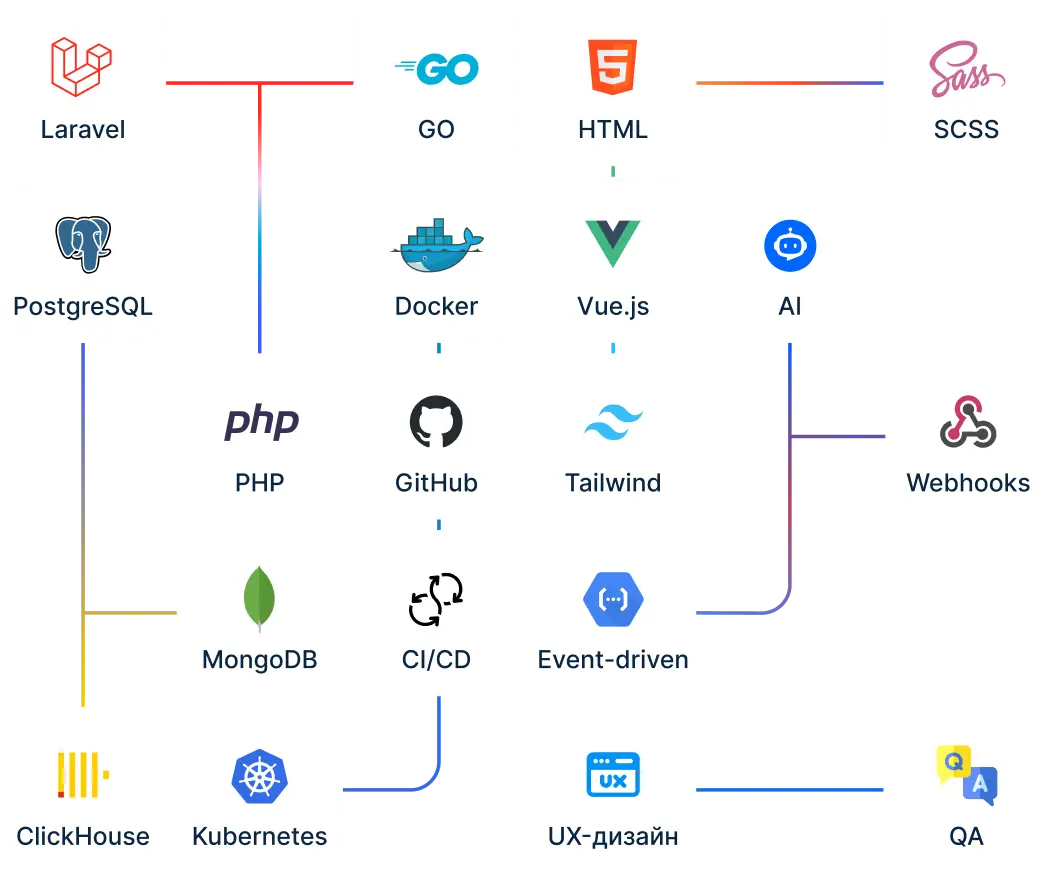
All technical decisions are fixed in the documentation so that your system could be maintained and developed both by our team and your internal specialists.
Security

Legal and Information Security of the System

We design the ERP taking into account the requirements of corporate security and data protection. WEBDELO works with companies from the US, Europe, and other countries, therefore the architecture of the system initially takes into account international requirements for the storage of data, financial information, and commercial secrets.

Compliance with international data protection requirements

The architecture of the system takes into account the requirements of laws on the protection of personal data, including GDPR (General Data Protection Regulation) and CCPA (California Consumer Privacy Act). User data can be stored on the servers of the required country, and personal information is protected and, if necessary, can be deleted upon request.
Readiness for financial and IT audits

A strict system of access rights and a log of all financial operations are implemented in the system. This ensures transparency of the system's operation and simplifies passing internal and external audits.

Protection of intellectual property and company data

We work under confidentiality agreements and use an isolated development infrastructure. Financial algorithms, databases, and other internal data of the company remain protected and are not transferred to third-party systems or public services.

Q&A

What to do if business processes change during the development process?
This is a normal situation for a growing business. We design the system so that the rules of work can be changed without completely processing the system. For example, you can change the approval chain, calculation of indicators, or the logic of departments without changing the main architecture.
How do you protect the project from budget growth?
The budget of the main system is fixed in the contract. Any additional functions that go beyond the basic project undergo a separate approval with an assessment of terms and cost. You understand in advance how much the next stage of system development will cost.
What happens if the key architect leaves the project?
All technical decisions and the architecture of the system are documented in detail. You get not only the source code but also instructions on how the system works. Thanks to this, a new specialist can quickly connect to the project without risk to the business.
Is it possible to safely connect suppliers or B2B clients (corporate partners) to the system?
Yes. Separate cabinets with limited access are created for partners. They see only their orders and documents, and the financial and internal data of the company remain completely protected.
Is it possible to continue using our current analytics systems?
Yes. The ERP can transmit data to your usual analytics and reporting systems. Management continues to work in familiar interfaces, but gets more accurate and relevant data.
Will ERP help during an audit or attracting investments?
Yes. The system stores the history of all operations and forms transparent reporting. This simplifies auditor checks and increases investors' trust in the company.
Contacts

Ready to discuss your project?

Leave a request. We will contact you within 2 hours, ask 5-7 clarifying questions, and prepare a commercial offer with an exact estimate and timeline.
TERMINOLOGY

Glossary

Below is a glossary of this text. The terms are structured in alphabetical order and divided into two groups: English terms/abbreviations and technical concepts.

English terms and abbreviations
*
API (Application Programming Interface) — a software interface that allows different IT systems to exchange data with each other (for example, for automatic import of real estate catalogs).
*
B2B (Business-to-Business) — a business model in which the clients or partners of the company are other companies, and not end consumers.
*
BI (Business Intelligence) — systems of management analytics. Tools that collect data from across the company and help management make decisions based on them.
*
CCPA (California Consumer Privacy Act) — a California (US) personal data protection law, the requirements of which are taken into account when designing a secure architecture.
*
CRM (Customer Relationship Management) — a customer relationship management system. Often used by businesses as a separate third-party SaaS service, the functionality of which developers offer to fully transfer and automate within a single custom ERP system.
*
E-commerce — electronic commerce; the sphere of online sales of goods and services (online stores, marketplaces).
*
Enterprise — a large corporate business with a branched structure, holdings, and companies with multi-level processes.
*
ERP system (Enterprise Resource Planning) — complex software for automation and management of all key business processes of the company (finances, warehouse, production, orders, document flow) in a single contour.
*
GDPR (General Data Protection Regulation) — the EU general regulation on personal data protection, an mandatory standard when developing international digital products.
*
MVP (Minimum Viable Product) — minimum viable product; startup stage when the system has a basic set of functions to launch and check demand.
*
POS (Point of Sale) — a cash node or point of sale; systems for accounting of goods and conducting transactions in retail trade, with which an ERP can integrate.
*
SaaS (Software as a Service) — cloud services and software provided on a regular subscription model (in the text, contrasted with a proprietary independent ERP).
*
Scale-up — the stage of active growth and scaling of a business, following the startup stage.
*
Tech Lead — technical head of the project or chief architect of IT systems.
Technical concepts
*
Clean architecture — an engineering approach in which the internal business logic of the system is strictly separated from user interfaces. This makes it easy to develop the project, update modules, and transfer the code to other developers.
*
Custom ERP — an individual management system developed from scratch to fit unique requirements, logic, and tasks of a specific business (unlike template mass products).
*
Dashboard — a visual information panel on which key business metrics and indicators are displayed in real-time for owners and managers.
*
Event-driven architecture — a principle of building IT infrastructure in which system modules work independently; updating or failing of one module does not affect the operation of the remaining parts.
*
Integration — the process of combining the implemented ERP system with existing external services (accounting programs, logistics platforms, websites, payment systems).
*
Microservices — a variant of IT architecture in which a large application is divided into a set of small, independent modules.
*
Stream analytics — a technology of continuous processing of large volumes of data without loss of system speed.
cookies We use Cookies

We use cookies to improve website performance, personalize content, and analyze traffic. You can choose which categories of cookies to allow. For more information, please see our Cookie Policy. You can change your preferences at any time.

Essential (Required)

Ensure the website functions properly (navigation, access to secure areas). Always enabled and can only be changed in your browser settings.

Analytics

Help us understand how you use the website so we can improve our services. Do not collect personal data. We use several analytics tools for this purpose.

Advertising

Used to deliver personalized ads and measure the effectiveness of advertising campaigns.