


Market Entry for B2B and tech companies: entering the markets of the USA, Germany and Russian-speaking countries
Many mid-sized companies already feel confident in their domestic market, but their website, messaging, and marketing system are not tailored for buyers in the USA, Germany, or Russian-speaking countries. We act as an international digital partner for market entry: local teams in the USA, Germany, and the Russian-speaking region help adapt positioning, website, and campaigns for the new market without breaking the core of the business. We take on the entire digital block for entering a new market: from market and audience research to developing or redesigning the website, localizing content, setting up SEO, and paid advertising.
What task are we solving
in market entry projects
Most attempts to enter a new market fail not due to a weak product, but because the digital presence does not meet the expectations of the new audience. In this section, we document typical situations that directors, CTOs, and product managers from medium businesses bring to us, and the portion of tasks that we take on.
does not work in the new market
The site was created for a familiar market (for example, Germany or another European country), but appears foreign to clients in the USA or another region: the accents are wrong, the structure is inconvenient, there is no clear value proposition or reasons to get in touch with you specifically.
The texts are formally correct, but written by non-native specialists, lacking industry language and a professional tone, which creates a sense of distance and distrust among local clients.
Different markets respond differently to arguments about price, reliability, status, eco-friendliness, and speed of implementation. A campaign that was successful at home does not yield predictable leads in another country.
The company lacks experience with the necessary advertising systems, platforms, and formats in the target region, as well as proper cross-market analytics and understanding of unit economics in each direction.
between markets
The internal team struggles to simultaneously understand the product, local culture, and digital marketing tools. A partner is needed who speaks to you in a language you understand (DE/EN/RU), and with the market— the language of clients and the industry.
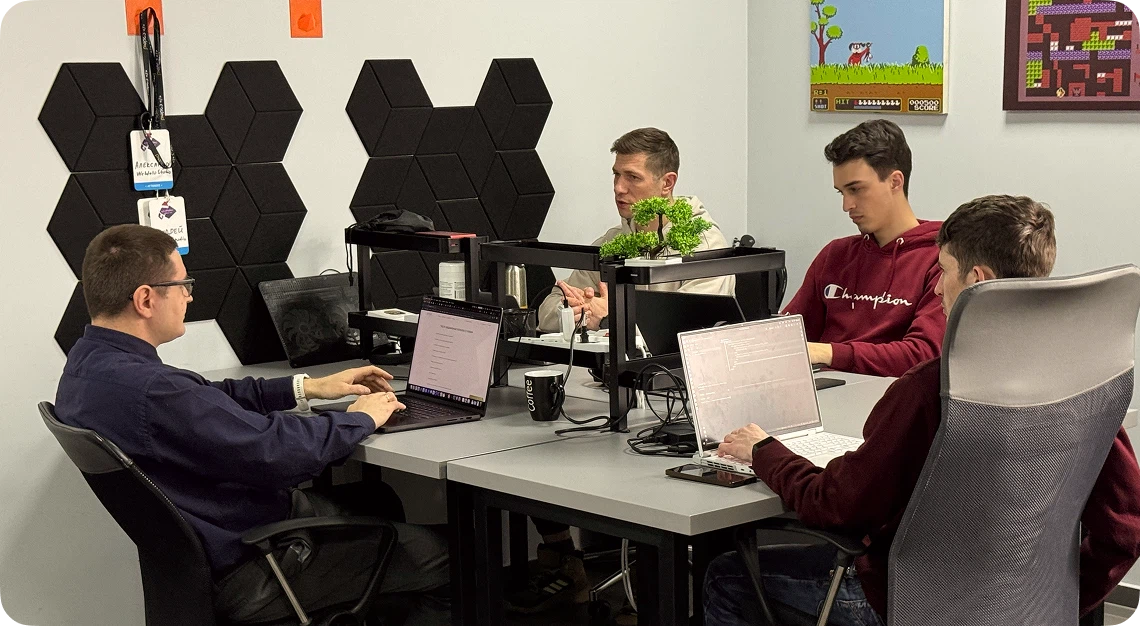
Who we are as a partner for entering new markets
We are an international team with offices and legal companies in four countries. This gives us the opportunity to work with European, American, and Russian-speaking clients in a format that is familiar to them: with clear contracts, time zones, and communication language.
We focus on B2B, tech, and medium-sized manufacturing companies that are interested in not just "creating a website in English," but in establishing a sustainable presence in a new market: from the first contact to a steady stream of inquiries.
Geography and teams
The marketing director and several English-speaking managers are located in Miami, who negotiate, help formulate an offer for the US market, and take on part of the project management.
The technical director and a team that speaks German and Russian and is responsible for complex technical solutions, architecture, and project execution quality for the DACH region are based in Germany.
The back office and a team of developers operate in Chișinău. This allows us to assemble strong teams for projects and maintain a reasonable cost level while preserving quality.
The team lead and developers who understand the specifics of projects from the CIS countries are located in Saint Petersburg, and they can explain the requirements of such clients to colleagues in other offices.
Languages and communication format
We build our communication so that you do not have to "switch context" on every call:
- We can conduct the project in Russian, English, or German;
- On the USA side, managers with native English and fluent Russian work with clients;
- On the Germany side, specialists confidently communicate equally in German and Russian;
- Within the team, project managers and analysts translate business tasks into the language of designers, developers, marketers, and back.
Thanks to this structure, we address not only technical and marketing tasks but also the human factor: cultural differences, nuances of business communication, and client expectations in different countries.

How we conduct market entry projects
into new markets
In projects for entering the USA, Germany, or Russian-speaking countries, we follow a repeatable process. It is clear for the management team, transparent in terms of timing, and helps avoid jumping straight to advertising before positioning and the website are established.
Product and situation analysis
First, we need to understand what exactly you are selling, to whom, and how it currently works in the domestic market.
- We conduct interviews with founders, directors, technical and product leaders;
- We document key product features, limitations, customer types, and typical use cases;
- We review the current website, presentations, commercial proposals, and sales and marketing reports.
At the end, you receive a consolidated understanding of how your product appears "from the outside" and what of this is important for the new market.
Target market and competitor analysis
Next, we turn to the target market and competitors in the relevant country or region.
- We study how competitors describe their products and services, what arguments and formats they use;
- We assess the customer journey: how a customer searches for solutions, what comparisons they make, and what barriers they face;
- We look at the promotion channels used by local players in your niche.
This allows us to avoid the typical mistake: copying your own approach "as we do at home" in a market where decisions are made differently and websites are read differently.
Positioning and website structure for the new market
Based on the first two stages, we compile a working version of the positioning and the website structure for the new market.
- We formulate the main value proposition for the new market in terms of benefits and clear criteria for selection;
- We propose the structure of the main page and key internal sections, tying them to real customer questions;
- We align on which blocks and arguments are essential for trust in the specific country (cases, certificates, partners, testimonials, technical details).
The goal of this stage is for both you and the target audience to see the same product, but through the "right lens" for the markets of the USA, Germany, or Russian-speaking countries.
Design, development, and localization of content
When the structure and messaging are agreed upon, we move on to the visual aspects and content.
- We design interfaces and UX based on the habits of users in the target region;
- We develop or refine the website considering technical requirements, loading speed, and future development;
- We prepare texts with the involvement of native speakers and experts who understand the industry and terminology.
The result is a website that looks "native" to the local client while remaining an honest reflection of your actual product.
Marketing setup and campaign launch
After launching the updated website, we move on to attracting traffic and inquiries.
- We select channels that make sense for your segment (search advertising, professional social networks, niche platforms);
- We configure advertising campaigns and basic search optimization for the target region;
- We enable analytics to track inquiries, lead costs, and overall effectiveness.
We do not limit ourselves to launching campaigns "from a checklist" — our goal is for you to gain an understanding of how exactly the new market responds to your product and where the growth points are.
Support, optimization, and scaling
Entering a new market is not a one-time launch, but a series of iterations. At this stage, we help maintain momentum.
- We regularly analyze results across channels and pages of the website;
- We propose hypotheses for changing structures, texts, creatives, and the offers themselves;
- We help prepare for industry events, exhibitions, and conferences in the target region.
This approach allows us to gradually transition the new market from the status of "experiment" to a stable business direction with predictable figures on traffic, leads, and deals.
Which companies we work with
We focus on companies that already have a functioning product and a stable business, but lack an adapted digital presence for the new market. Most often, we are approached by managers and technical leaders from medium-sized businesses who value clear processes, predictable results, and careful handling of the brand.
Websites for developers and agencies
We help agencies and companies working with properties in different countries establish a clear digital presence for buyers from the USA, Europe, and Russian-speaking countries.
Manufacturing
Advertising for salons and wellness brands
We accompany companies that create complex machinery, engineering solutions, interactive equipment, and other B2B products entering new markets.
Promotion of clinics in the CIS and the USA
We help clinics in the CIS and the USA build a patient flow through their websites and search engines. We deal with medical specifics, requirements for wording, and patient expectations.
Promotion of clinics and private doctors
We work with companies that bring equipment and services to the market in sensitive areas, where precision of wording and trust of the professional audience are especially important.
IT and SaaS projects
Marketing and architecture for IT products
We help technology and service businesses adapt their websites, communications, and marketing for new regions, without disrupting the existing product architecture.
Blockchain
Launch and support of blockchain projects
We accompany crypto projects during the stages of launch, scaling, and market entry. We work with fintech products, complex architecture, and international audiences.
Scale and Level of Maturity
Our projects are usually not entry-level companies, but businesses with stable revenue and teams ranging from several dozens to several hundred people. It is important for them:
- To maintain the current market and not "break" the website that is already functioning;
- To carefully test the new region and gradually increase their presence;
- To structure processes so that marketing in the new market does not depend on one person.
Examples of tasks and results
In this section — several typical scenarios that we encounter, and the format of work that we offer. All examples are anonymized but reflect the real experience of the team.

entering the US market
2025
The agency, experienced in the European market, wanted to systematically sell properties in the US, but the existing website and sales department were geared towards a different type of clients.
We helped design and launch a separate version of the website for buyers from the US, adapted the structure and messages to meet local expectations, set up advertising campaigns and helped establish a connection between marketing and sales. Additionally, we found local partners who could handle part of the inquiries.
The company received a stable flow of new inquiries about properties in target regions, and the sales department gained a clear and transparent funnel for deals from the US.

entering the US market
2025
A company from a Russian-speaking country produced interactive equipment and wanted to enter the US market, but the existing website and materials were not taken seriously by American clients.
We redesigned the website and marketing materials to meet the expectations of B2B clients in the US, adapted the meaning of the text, visual accents, and scenarios for presenting the product, and then set up advertising campaigns based on how similar solutions are searched and selected in the US.
The company started receiving targeted inquiries from new clients, as well as better understanding which market segments are most sensitive to their offerings.

2024
The team developing equipment for working with children with developmental disabilities wanted to enter the US market and reach out to a professional audience: doctors, clinics, specialists.
We developed a new website focusing on professionalism and reliability, adapted the wording for a medical context, set up campaigns in search engines and social networks, paying particular attention to the correct presentation of the topic.
After launch, the company experienced a noticeable increase in inquiries from potential clients and partners and was able to move on to the next stage of product and service development.
Technical reliability and support
Entering a new market is almost always associated with changes in infrastructure: domains, hosting, integrations, loading speed, data protection. We view the project not only as marketers and copywriters but also as a technical team responsible for the stable operation of websites and services.
Infrastructure and performance
We help you choose a provider for the target market, taking into account speed, reliability, and data placement requirements, and configure the environment together with your specialists.
We monitor to ensure that the website loads quickly in target countries and withstands the load during advertising campaigns, events, and seasonal peaks.
We set up regular backups and updates to reduce the risks of data loss and security issues.
Support and team interaction
We can integrate into the existing infrastructure, without imposing our own solutions, but carefully embedding into current processes.
You have a clear contact: a project manager and a technical lead who coordinate the work of the entire team.
At the end of the project, you will have documents, diagrams, and instructions that allow your team to be independent of a single contractor.
What happens if you start working with us
If you are considering entering the markets of the USA, Germany, or Russian-speaking countries, a joint project usually begins with a short introductory call. During it, we:
- Discuss your product, the current market, and target regions;
- Establish the starting point: what already exists in terms of the website, content and marketing;
- Preliminary assess the scope of work and possible collaboration format.
After that, we return to you with a proposal for the project structure: phases, timelines, team composition, and expected results at each step. Then you choose how to proceed: with a pilot launch or with a more complete entry.
If you want to discuss entering a new market or check an already launched project, we are ready to join at any stage — from the initial idea to optimizing the operating system. at each step. Then you choose how to proceed: with a pilot launch or with a more complete entry.
5.0
Total from 3 Google cards
USA, Germany, Moldova
On the European freelance exchange
+130 projects

A brief about us and our work

Glossary of key terms for new market entry projects
Frequently Asked Questions
We have gathered several questions that companies planning to enter a new market most frequently ask us.
