Software Developers in 2026: Why AI Won't Replace You
AI reduces development costs but the Jevons Paradox means demand for engineers grows. At Webdelo we use a governed six-stage process with human-in-the-loop to maintain quality, security, and architectural integrity in B2B projects.

Why Developers Aren't Going Away - and the Data Proves It
Despite years of headlines warning that AI will eliminate software engineers, the actual labor market data points in the opposite direction. Citadel Securities reports a +11% year-over-year increase in software engineering job postings on Indeed, while the U.S. Bureau of Labor Statistics projects +15% growth in Software Developer employment through 2034 - roughly 129,200 new openings per year. I'm Andrey Popov, CTO at Webdelo, and I want to explain why this isn't surprising at all, and how we've built our development process around AI agents without losing the engineering discipline that B2B clients depend on.
The fear of displacement gets attention, but it misses the actual transformation happening. AI changes how engineers work - it doesn't eliminate the work. In this article I'll walk through the economics behind growing demand (the Jevons Paradox), show you where AI genuinely accelerates our work at Webdelo, where it reliably makes mistakes, and why B2B clients in fintech and other critical domains require human oversight regardless of how capable AI tools become.
What the Job Posting Data Actually Shows
Job postings are a leading indicator of employer demand - not a lagging measure of nostalgia. When Citadel Securities analyzed Indeed data and found software engineering postings growing at +11% year-over-year in 2026, that signal runs directly counter to the "AI will take your job" narrative that dominates tech media. You can verify the underlying data yourself through the FRED Software Development Job Postings index, which tracks Indeed listings with seasonal adjustment going back to 2017-2019 baselines.
There's an important caveat worth making: job postings are not the same as hires. Some listings stay open for months, some roles get posted multiple times, and pipeline vacancies inflate the numbers. But as a directional signal for employer demand, the software development index outpacing the overall Indeed index is meaningful. Companies are not pulling back on engineering roles - they're competing harder for engineers who can work alongside AI tools effectively.
The BLS adds longer-term confirmation. Their 2024-2034 employment projections show Software Developers, QA Engineers, and Testers growing at +15% - one of the faster growth rates across all occupational categories. That's approximately 129,200 new job openings per year, even accounting for automation of routine work.
Programmer vs. Developer: The BLS Distinction That Matters
The BLS actually separates two roles that the popular conversation conflates. "Computer Programmers" - defined as people who write code according to specifications provided by others - are projected to decline by 6% through 2034. "Software Developers" - engineers who define requirements, design systems, make architectural decisions, and own the full delivery - are projected to grow 15%.
This distinction maps almost perfectly onto what AI is actually automating. Routine coding to a well-defined spec is exactly what models like Claude Code and GitHub Copilot do well. Defining the spec, designing the architecture, reasoning about edge cases, auditing output for correctness and security - that's the developer role, and it's becoming more important, not less.
The Jevons Paradox: Why Cheaper Development Means More Development
In 1865, economist William Stanley Jevons observed that improvements in coal-burning efficiency led to more coal consumption, not less. When a resource gets cheaper to use, demand grows - often dramatically. This effect, known as the Jevons Paradox, applies directly to what's happening in software development today.
When AI tools cut the cost of writing a module, generating an API, or building a prototype from days to hours, that reduction doesn't eliminate demand for engineering work. It expands the addressable market for software. Projects that were previously uneconomical - internal tooling for mid-size companies, niche B2B automations, custom reporting systems, fintech integrations for smaller markets - suddenly make financial sense. The pie grows. More software gets built. And someone needs to architect it, review it, integrate it, maintain it, and take responsibility for it.
This isn't speculation - it's the pattern that repeated itself through every previous wave of developer productivity improvements. CASE tools in the 1990s were going to automate programmers out of existence. Low-code platforms in the 2010s were supposed to end custom development. In both cases, the productivity gains lowered costs, expanded the market, and increased demand for professional web development in the USA. Each wave pushed the role upward - from writing code to designing systems, from designing systems to orchestrating complex architectures.
Why the "AI Will Replace Engineers" Argument Is Incomplete
The replacement argument treats engineering as a commodity - as if all engineering work is the same, and AI can therefore substitute uniformly. That model doesn't hold up against the BLS data or against what we observe at Webdelo. What AI replaces is the lowest-abstraction part of the work: converting a well-specified requirement into working code. What it doesn't replace is everything that happens before and after that step - requirements engineering, architecture, risk assessment, security review, integration with existing systems, and accountability to the client.
In B2B contexts especially, clients aren't buying code - they're buying a functioning system, a predictable delivery process, and a partner who takes responsibility for what ships to production. That's not something a language model can sign a contract for. A credible web design agency in the USA knows that the technical foundation and the user-facing experience must be accountable to the same client relationship.
Where AI Genuinely Accelerates Our Work at Webdelo
I've been running AI tools in our development workflow for long enough to be specific about where the gains are real. The headline number - Microsoft Research found developers with GitHub Copilot completed tasks 55.8% faster in a controlled experiment - matches the order of magnitude of what I see in practice, though it varies significantly by task type.
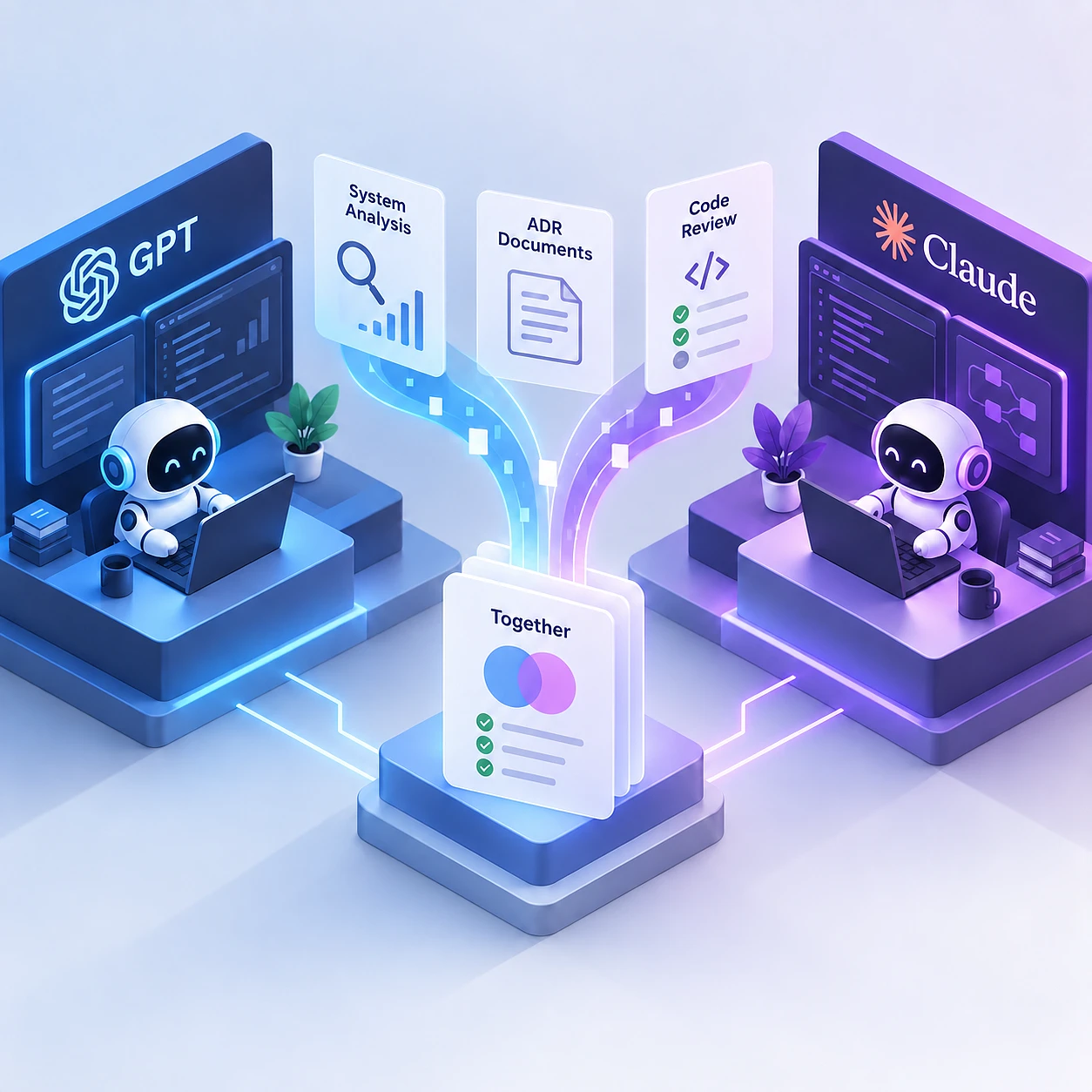
At Webdelo we use three primary tools for different contexts:
- Claude Code - handles routine engineering scaffolding: data models, repository layers, DTO conversions, query builders, field mappings. Given a clear specification, it generates correct, idiomatic code at a pace no human can match.
- ChatGPT Codex / Codec - effective for generating Go and Laravel APIs from Swagger/OpenAPI specifications. When the contract is well-defined and the patterns are standard, output quality is high.
- JetBrains Junie Pro - inline IDE assistant for quick refactors, targeted fixes, and context-aware completions within an existing codebase.
Beyond code generation, we use AI for documentation and for analyzing logs of our own agentic cycles - tracking tool call patterns, round-trip times, and batching efficiency. The meta-level use (agents analyzing their own behavior) is underappreciated as a productivity lever - an approach that parallels how GEO and AI SEO in the USA optimizes content for AI-driven discovery rather than just traditional search.
"I've noticed that agents radically accelerate routine work - but in B2B they don't replace the engineer. They increase speed, while responsibility for quality and security actually becomes more important, not less." - CTO, Webdelo
Where the Gains Are Largest
The highest productivity gains appear in tasks with clear specifications and established patterns: CRUD implementations, standard API layers, data transformation pipelines, unit test scaffolding, and documentation generation. These are genuine time savings - work that took a senior engineer half a day now takes two hours including review time.
The gains shrink quickly as ambiguity increases. Architecture decisions, novel integration problems, security-sensitive code, and anything requiring deep domain knowledge of the client's system still demand full engineer engagement. The model gives you a starting point; the engineer validates, adjusts, and takes ownership.
Where Agents Make Mistakes: Architecture, API Contracts, and Forgotten Details
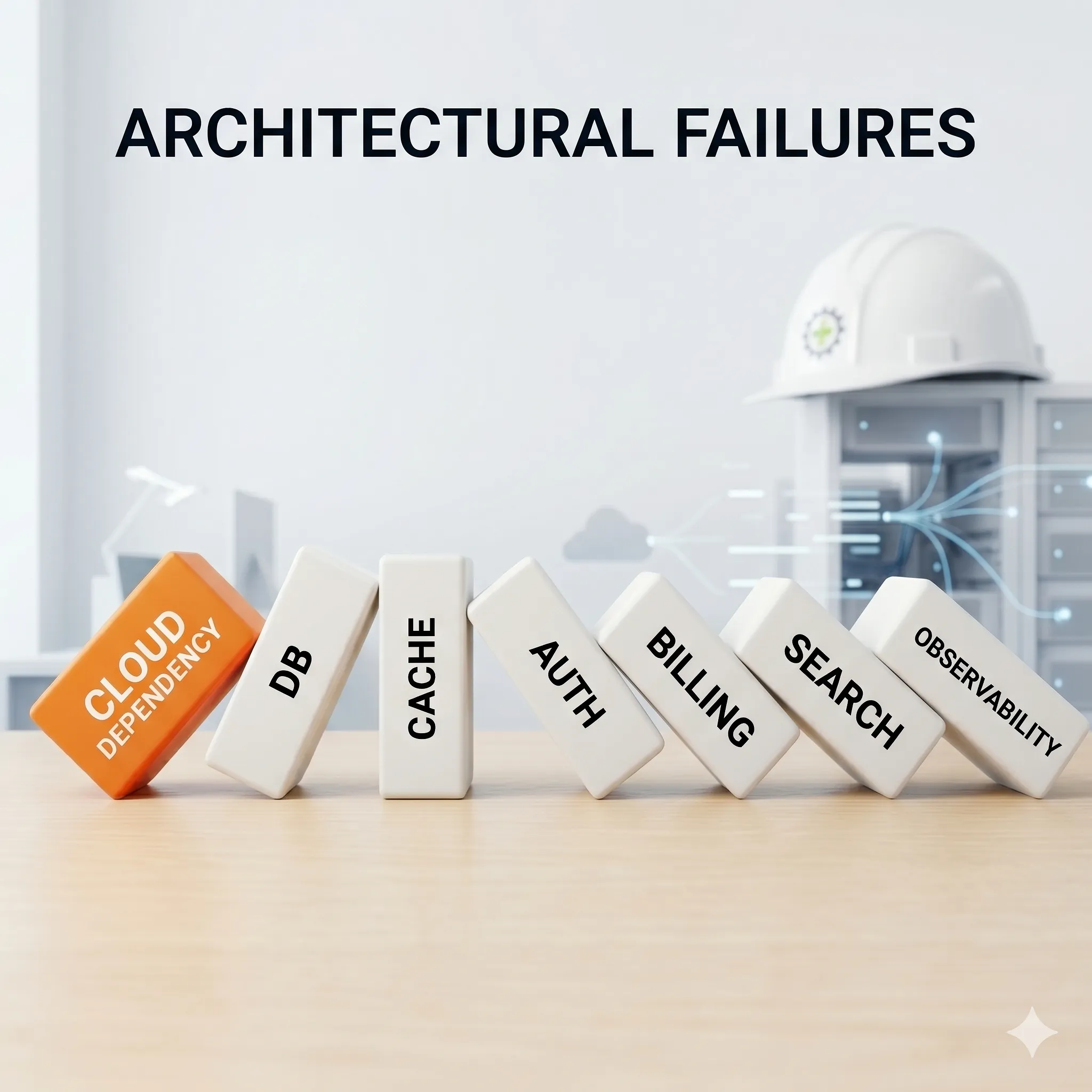
AI agents don't fail on syntax. They fail on the things that require understanding a system as a whole - and in B2B projects, those failures have real consequences. Based on our experience at Webdelo, the consistent failure modes fall into four categories.
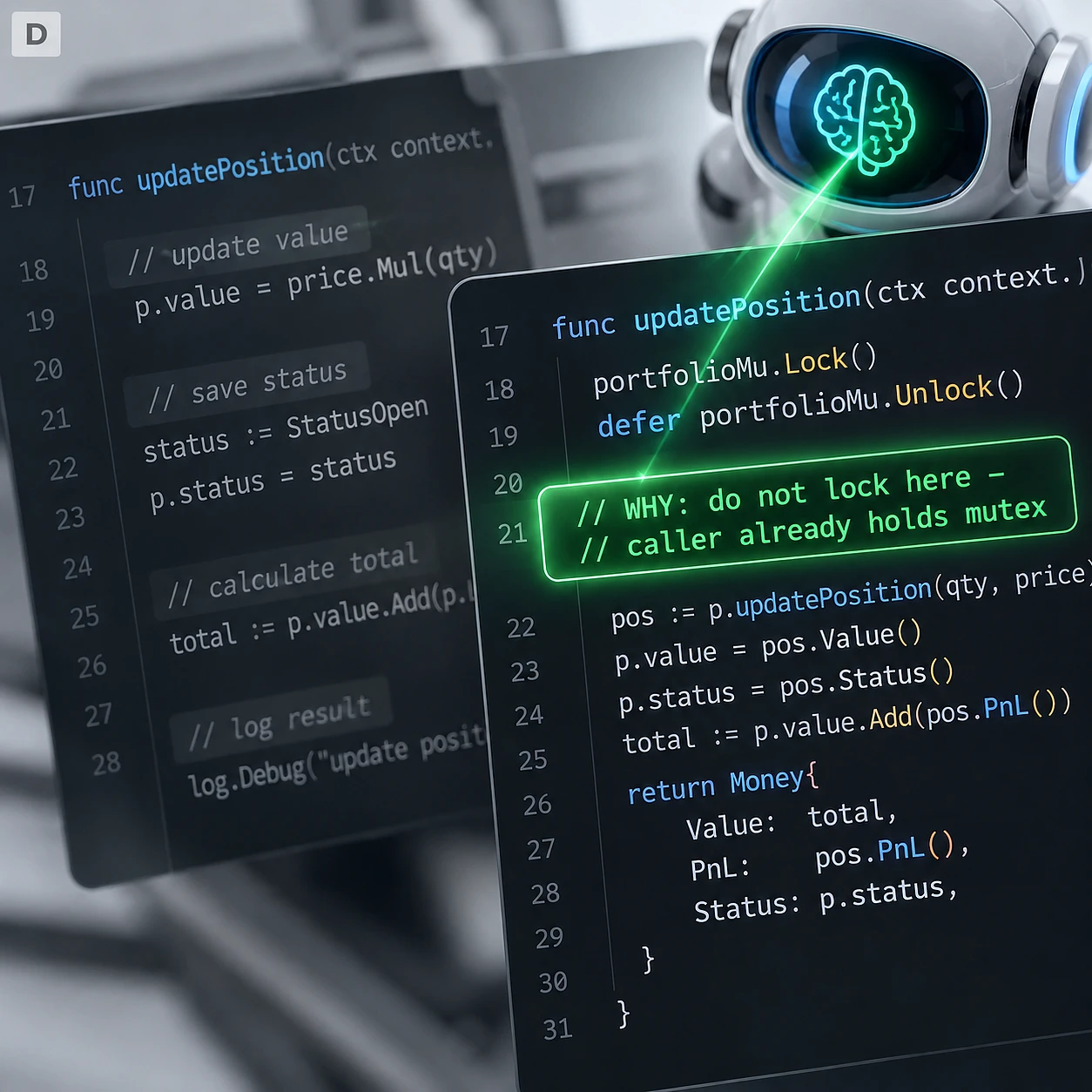
Architectural layer violations. Models tend to collapse abstractions. They'll put business logic in the wrong layer, mix DTO and domain model concerns, or structure Go packages in ways that seem reasonable locally but create coupling problems at scale. This is invisible to a reviewer looking at a single file - it requires understanding the intended architecture.
API drift between frontend and backend. When generating code from OpenAPI specs, the model often produces a backend implementation and a frontend client that diverge in subtle ways - nullable vs. non-nullable fields, mismatched enum values, different pagination conventions. These discrepancies surface as runtime bugs, not compilation errors.
Forgotten operational scenarios. A model asked to implement a feature will implement the happy path well. It systematically underweights bulk operations, global status transitions, admin overrides, rollback scenarios, and the edge cases that only matter when things go wrong. In fintech systems, "things going wrong" isn't hypothetical - it's a design requirement.
Performance anti-patterns. N+1 query problems, missing indexes on foreign keys, synchronous calls that should be async - models don't have a runtime to test against, so they optimize for syntactic correctness and miss execution-time concerns.
What the Data Confirms
Our observations have external validation. The 2024 DORA Report from Google Cloud found that increased AI adoption correlates with measurable drops in delivery stability: -1.5% in throughput and -7.2% in stability for teams that added AI tools without adjusting their quality processes. Speed went up; reliability went down.
Veracode's 2025 GenAI Code Security Report found that approximately 45% of AI-generated code contains security vulnerabilities by their methodology. The model optimizes for completing the task as specified - it doesn't optimize for security properties that weren't explicitly required.
"From my own experience, if you tell a model 'do everything well,' it optimizes for the formal goal. In enterprise development, that almost always leads to bugs in the details - which is why without ADR, PRP, and review, we don't ship that to production." - CTO, Webdelo
Human-in-the-Loop in B2B: Our Six-Stage Process
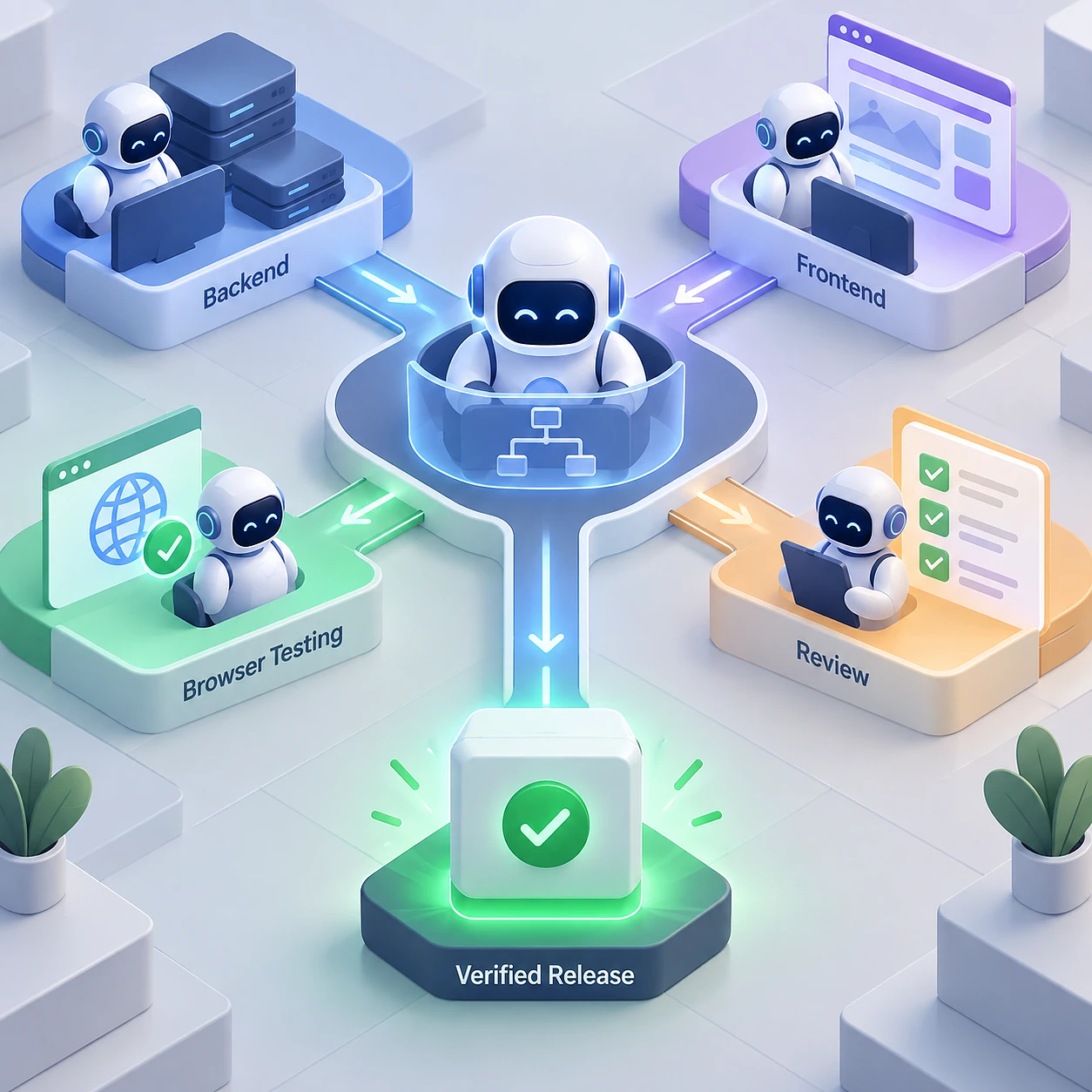
At Webdelo, we've built a structured process for AI-assisted development that addresses the failure modes above without sacrificing the speed gains. The pipeline has six stages, and human review is built in at the points where it matters most - not as a formality at the end, but as a structural control at the points where AI judgment is least reliable.
Here's how it works in practice:
- Requirements (ТЗ): The model participates in drafting the technical specification - generating clarifying questions, surfacing edge cases the human author missed, and proposing scope boundaries. The human owns the final spec.
- ADR (Architecture Decision Record): An architect produces an explicit record of key architectural choices: data model decisions, package structure, integration approach, performance constraints. This document becomes the contract that all downstream work must satisfy. Validated by a human architect.
- PRP (Pull Request Plan): In a fresh session - without accumulated context from the requirements discussion - the agent produces a detailed implementation plan. The clean session prevents context drift where the model unconsciously assumes things discussed earlier.
- Execute: The agent implements according to the plan. This is where Claude Code, Codex, or Junie does the heavy lifting.
- Agent Review: A separate agent instance performs a blackbox review against the ADR and PRP. It hasn't seen the implementation session, so it evaluates the output on its merits, not against the author's intent.
- Human Review: A senior engineer or architect reviews the final output. Their review is informed by the ADR and agent review report - they focus attention where the automated review flagged concerns.
Our Data Policy
B2B clients have legitimate concerns about where their code goes. Our policy is straightforward: proprietary business logic, financial processing code, and client-confidential data do not go to external LLM APIs. For those components, we use local models where AI assistance is needed, or we do the work manually with enhanced review. For standard implementation tasks - framework code, infrastructure, generic services - external AI assistance is appropriate with standard confidentiality agreements in place.
This isn't primarily a legal position - it's a trust position. When a fintech client asks us to explain how their code is handled, we want to give them a clear, honest answer, not a vague "we take security seriously" statement.
Why Code Audit in Fintech and Critical Systems Is Non-Negotiable
In enterprise software development - particularly fintech - code review and audit aren't best practices, they're contractual and regulatory requirements. NIST SP 800-218 (the Secure Software Development Framework) defines the language that enterprise procurement teams and government contractors use when specifying secure SDLC requirements for software vendors. If you're selling to US federal agencies or their contractors, SSDF compliance is often explicit in the RFP.
For AI-generated code specifically, the OWASP Top 10 for LLM Applications provides a useful map of the threat landscape. Prompt injection, insecure output handling, training data poisoning, and model denial-of-service are not theoretical concerns - they're documented attack patterns with known mitigations. Understanding this framework helps our team make informed decisions about where AI agents operate and what guardrails they need.
Fintech brings additional domain-specific requirements. Transaction validation logic must be deterministic and auditable. Data consistency across distributed services must be provable, not just likely. When something goes wrong - and in financial systems, something always eventually goes wrong - there must be a clear audit trail of who made what decision and why. An AI agent that wrote code cannot sign off on that audit trail. A human engineer can.
Governed AI-SDLC as a Competitive Advantage
There's a business case for process rigor that goes beyond risk management. When we pitch to enterprise clients, the conversation often includes detailed questions about our development process: How do we handle AI-generated code? How do we ensure consistency with architectural decisions? What does our review process look like? Competitors who can't answer these questions specifically are at a disadvantage.
"Governed AI-SDLC" - a development process with documented AI usage, traceable decisions, explicit quality gates, and clear human accountability - is increasingly a sales argument in the B2B market. Clients who've been burned by AI-assisted projects that shipped fast but broke in production are actively looking for vendors with mature process. Companies that combine this with strong SEO services in the USA gain compounding advantages: technical credibility in sales conversations and organic visibility when enterprise buyers research vendors. That's the position we aim for at Webdelo.
Contract testing - specifically consumer-driven contract testing using tools like Pact - is one concrete engineering solution for the API drift problem described earlier. By generating machine-verifiable contracts from OpenAPI specifications and running them in CI, teams can catch frontend-backend mismatches before they reach integration testing. This is the kind of process investment that differentiates mature teams from those who rely on AI speed alone.
The Forecast: More Work, Faster Cycles, Different Skills
The engineer's role is shifting, not disappearing. The BLS data makes the directional case: Software Developers grow +15% through 2034 while Computer Programmers decline 6%. The work that's growing is the work that requires judgment, architecture, system thinking, and accountability - precisely the work that AI tools currently cannot perform reliably without human oversight.
In practical terms, the role is moving up the abstraction stack. Less time writing boilerplate, more time defining what should be built and ensuring it was built correctly. The competencies that matter more in this environment:
- Agent orchestration: knowing which tasks to delegate to AI, how to structure the delegation, and how to validate the output
- Prompt engineering and specification craft: the ability to write requirements that AI agents can interpret correctly reduces rework dramatically
- AI code review: developing judgment about the specific failure modes of AI-generated code in your domain
- Architecture and system design: higher leverage than ever when AI can implement decisions quickly
- Security and compliance reasoning: NIST SSDF, OWASP LLM Top 10, domain-specific regulations
For B2B software companies, the competitive dynamic is straightforward. Teams that build mature governed AI-SDLC processes now will deliver faster, catch more problems before production, and be able to articulate their process to enterprise procurement teams. Teams that adopt AI tools without adjusting their quality processes will see the DORA 2024 pattern: speed gains offset by stability losses. Investing in digital marketing in the USA amplifies that process maturity by reaching enterprise procurement teams earlier in their evaluation cycle. The technology is not the differentiator - the process discipline is.
The market for software is expanding into segments that were previously uneconomical to serve. That expansion is demand - for engineers who can build, architect, audit, and take responsibility for systems that are increasingly built with AI assistance.
Conclusion
The data from labor markets, government projections, and independent research all point in the same direction. AI accelerates and reduces the cost of software development - and by the Jevons Paradox, that reduction in cost expands demand rather than contracting it. Engineers who adapt their role toward architecture, quality oversight, and governed AI processes are positioned for growth, not displacement.
- Job postings for software engineers grew +11% YoY (Citadel/Indeed) while BLS projects +15% employment growth for Software Developers through 2034
- AI accelerates routine engineering tasks by meaningful margins (55.8% in Microsoft Research's controlled study), but the DORA 2024 data shows that speed gains without process discipline degrade delivery stability
- AI agents reliably fail at architectural decisions, API contract consistency, and operational edge cases - all areas requiring human judgment
- In B2B and fintech, audit trails, regulatory compliance (NIST SSDF, OWASP LLM Top 10), and client accountability make human-in-the-loop mandatory, not optional
- Governed AI-SDLC - documented process, traceable decisions, explicit quality gates - is an emerging competitive advantage in enterprise sales
If you need help implementing AI agents in your development workflow, setting up a governed AI-SDLC, orchestrating agent pipelines, establishing quality gates, or working safely with enterprise data - reach out to us at Webdelo. We'll look at your specific situation and suggest a practical path forward.
Frequently Asked Questions
Will AI replace software developers in the near future?
No - labor market data points in the opposite direction. Citadel Securities reports +11% year-over-year growth in software engineering job postings, and the U.S. Bureau of Labor Statistics projects +15% employment growth for Software Developers through 2034. AI changes how engineers work by automating routine coding tasks, but the demand for engineers who can architect systems, review AI output, and take accountability for quality is growing.
What is the Jevons Paradox and how does it apply to AI in software development?
The Jevons Paradox is an economic principle stating that when a resource becomes cheaper to use, overall demand for it grows rather than shrinks. In software development, as AI tools lower the cost of writing code, more software projects become economically viable - including internal tooling for mid-size companies, niche B2B automations, and custom integrations that previously weren't worth building. The total volume of software work expands, which means more demand for engineers, not less.
Where do AI coding agents typically make mistakes?
Based on practical experience, AI agents fail most consistently in four areas: architectural layer violations (putting business logic in the wrong layer), API drift between frontend and backend (subtle mismatches in nullable fields or enum values), forgotten operational scenarios (bulk operations, rollbacks, admin overrides), and performance anti-patterns (N+1 queries, missing indexes). These failures are hard to spot in code review because they require understanding the system as a whole, not just individual files.
What is human-in-the-loop and why is it important in B2B development?
Human-in-the-loop means keeping a human engineer in the decision-making process at critical points, rather than running AI fully autonomously. In B2B development, this is essential because clients aren't just buying code - they need a functioning system with predictable delivery, accountability for what ships to production, and compliance with contractual and regulatory requirements. A six-stage process (Requirements, ADR, PRP, Execute, Agent Review, Human Review) ensures AI speed gains without sacrificing the quality and auditability that enterprise clients require.
Why is code auditing non-negotiable in fintech and critical systems?
In fintech and enterprise software, code review and audit are contractual and regulatory requirements, not optional best practices. Standards like NIST SP 800-218 (the Secure Software Development Framework) define secure SDLC requirements that enterprise procurement teams and government contractors explicitly specify. AI-generated code introduces additional risks: Veracode found approximately 45% of AI-generated code contains security vulnerabilities, and models optimize for completing the task as specified without explicitly checking for security properties. Human engineers provide the audit trail and accountability that a language model cannot.
What is Governed AI-SDLC and why does it matter for business?
Governed AI-SDLC is a software development process with documented AI usage, traceable decisions, explicit quality gates, and clear human accountability at each stage. For businesses, it matters because it addresses a growing concern among enterprise clients: teams that adopted AI tools without adjusting quality processes saw speed gains offset by stability losses, as confirmed by the 2024 DORA Report. A mature governed process is increasingly a competitive advantage in B2B sales - clients who've been burned by fast-but-broken AI-assisted projects actively look for vendors who can articulate their process clearly.
What skills will be most valuable for software developers working with AI tools?
As the engineering role shifts up the abstraction stack, the most valuable skills become: agent orchestration (knowing which tasks to delegate to AI and how to validate output), prompt engineering and specification writing (requirements that AI can interpret correctly), AI code review (developing judgment about AI failure modes in your domain), architecture and system design (higher leverage when AI can implement decisions quickly), and security reasoning (NIST SSDF, OWASP LLM Top 10, domain-specific regulations). Less time will be spent writing boilerplate; more time on defining what to build and ensuring it was built correctly.